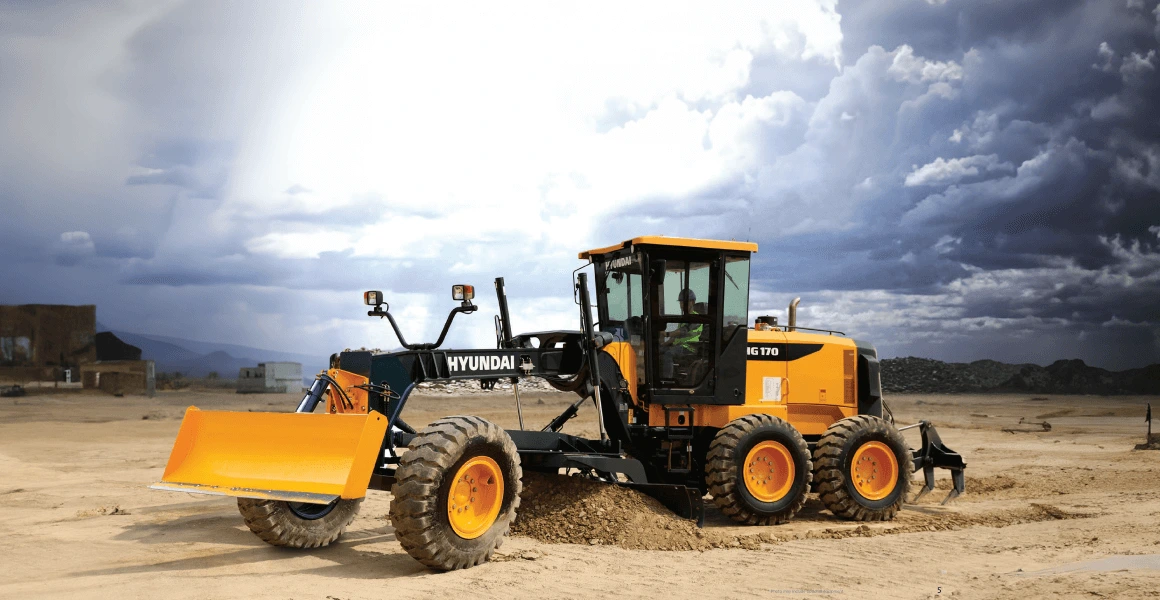
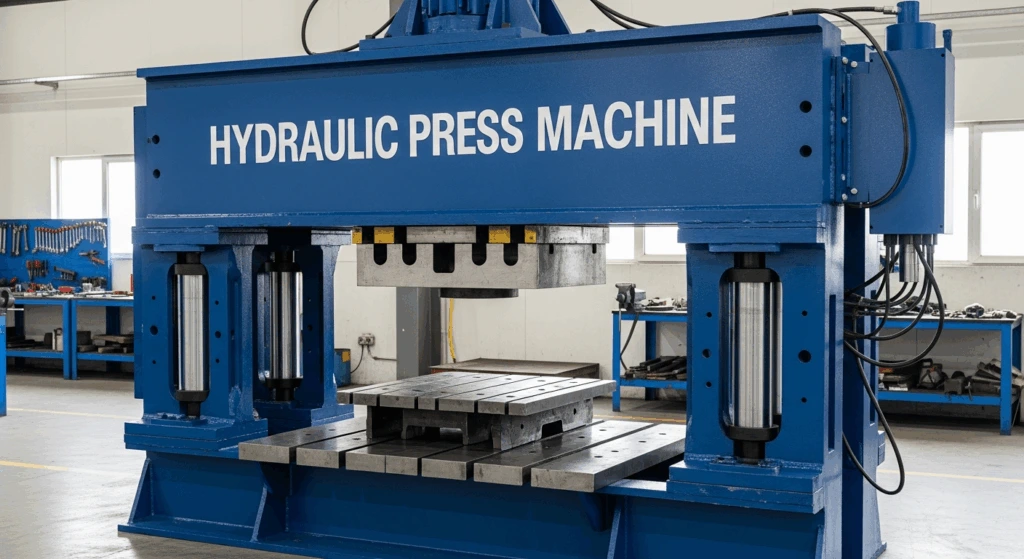
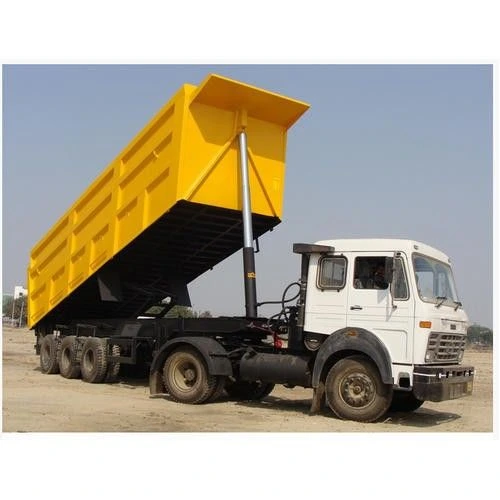
A double acting hydraulic cylinder is powered in both directions. Oil enters the cap-end port to extend the rod, and the rod-end port to retract it — so the cylinder delivers controlled force pushing and pulling, at whatever speed the circuit is set to.
That control is why most industrial and mobile machines use double acting cylinders. If the rod has to work horizontally, hold position mid-stroke, or pull a load back against resistance, gravity cannot do the job and a single acting cylinder will not either.
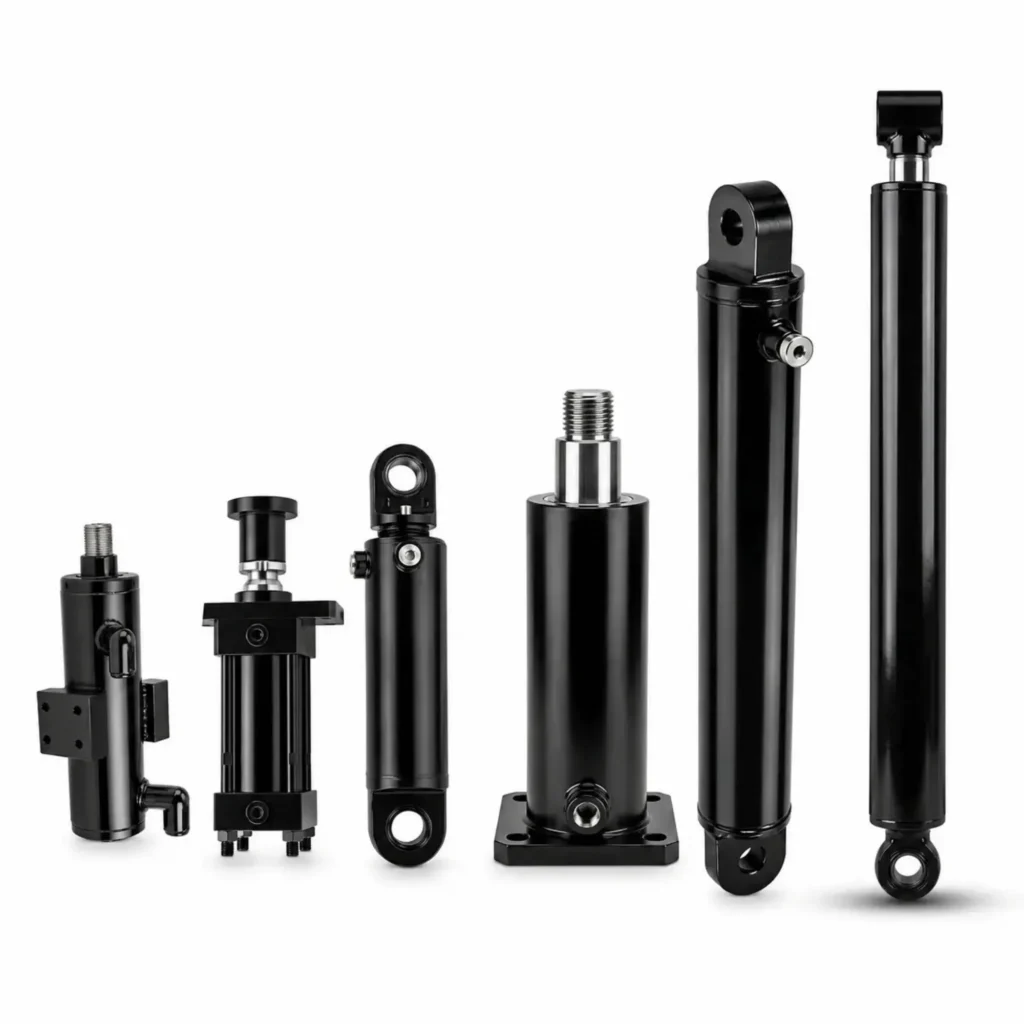
Fiable Hydraulics manufactures double acting cylinders to order at our ISO 9001:2015 certified plant in Chakan, Pune. Bore, rod, stroke, mounting, port position, cushioning and seal package are all built to your drawing — not selected from a catalogue. Every cylinder is pressure, function and leak tested before dispatch. Fifteen years supplying OEMs, machine builders and exporters across India and 20+ countries.
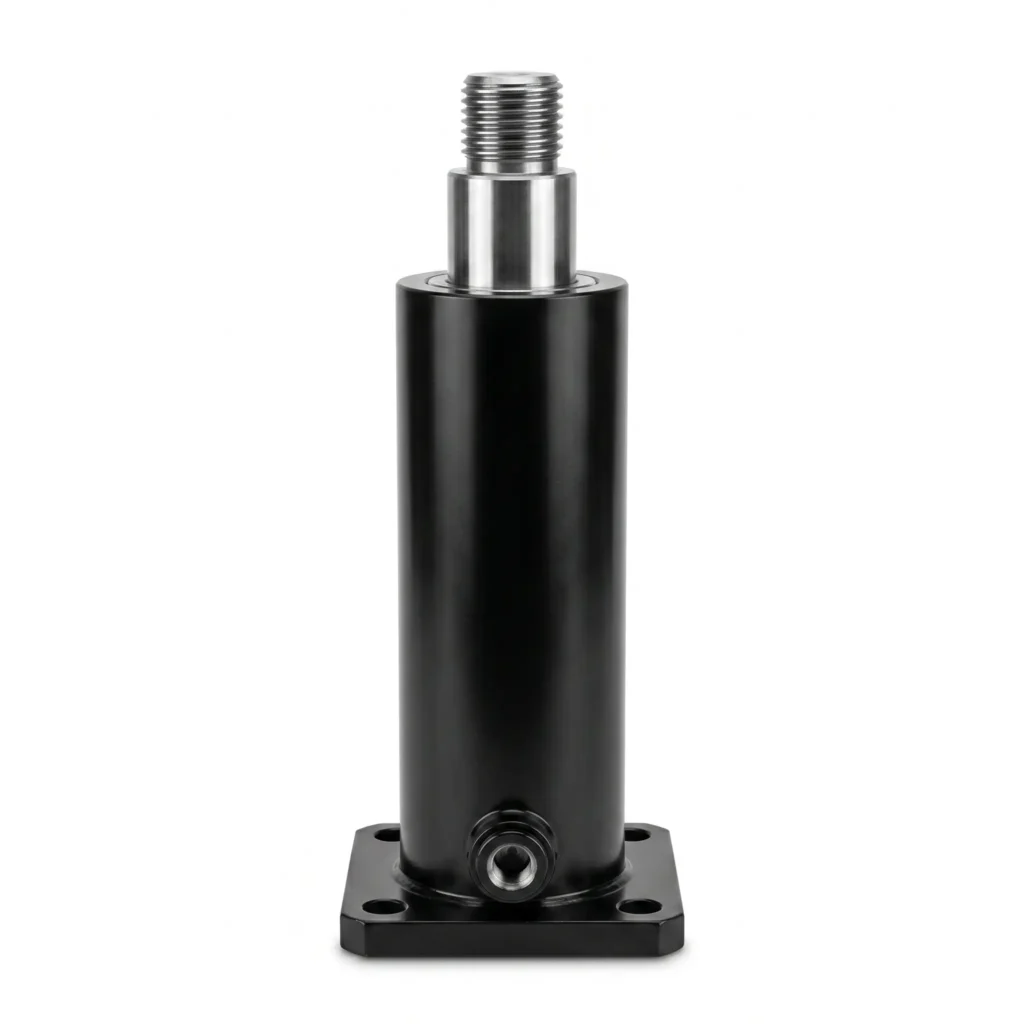
Click and drag to interact in 360° and explore structural dimensions.
Parameter Range | |
|---|---|
Bore size
|
40 – 250 mm
|
Rod diameter
|
16 – 200 mm
|
Stroke length
|
Up to 6000 mm
|
Working pressure
| |
Construction
|
Welded or tie-rod
|
Mounting
|
Flange, trunnion, clevis, foot, cross-tube — custom on request
|
Port options
|
Cap end, rod end, side or in-line, to drawing
|
Testing
|
Pressure, function and leak tested; test capability to 10,000 PSI
|
Component |
Material |
Tolerance |
|---|---|---|
Honed tube
|
ST 52.3
|
H8 / H9
|
Piston rod
|
EN 8 / EN 9 / EN 19 / EN 31, hard chrome plated
|
f7
|
Piston & gland
|
EN 8
|
—
|
Seals
|
Parker, Hallite, Royal
|
—
|
Theoretical force at 450 bar. Push uses the full bore area; pull uses the annular area. Actual output is slightly lower after seal friction.
Bore (mm) |
Rod (mm) |
Push (kN) |
Push (t) |
Pull (kN) |
Pull (t) |
Push : Pull |
|---|---|---|---|---|---|---|
40
|
25
|
57
|
5.8
|
34
|
3.5
|
1.64
|
63
|
36
|
140
|
14.3
|
94
|
9.6
|
1.48
|
80
|
45
|
226
|
23.1
|
155
|
15.8
|
1.46
|
100
|
56
|
353
|
36.0
|
243
|
24.7
|
1.46
|
125
|
70
|
552
|
56.3
|
379
|
38.7
|
1.45
|
160
|
90
|
905
|
92.3
|
619
|
63.1
|
1.46
|
200
|
110
|
1,414
|
144.2
|
986
|
100.5
|
1.43
|
250
|
140
|
2,209
|
225.2
|
1516
|
154.6
|
1.46
|
At a standard rod-to-bore ratio of around 0.55, pull force runs roughly 30–35% below push force. If your return stroke has to work against a real load, tell us —a larger rod raises pull force and buckling resistance, at the cost of more oil to extend.
Feature |
Double Acting |
Single Acting |
|---|---|---|
Ports
|
Two
|
One
|
Powered directions
|
Extend and retract
|
Extend only
|
Gravity, spring or load weight
|
Return method
|
Hydraulic pressure
|
Oil per cycle
|
Higher
|
Lower
|
Limited
|
Full control
| |
Seal count
|
Fewer
|
More
|
Cost
|
Higher
|
Lower
|
Best for
|
Push-pull duty, precise positioning, horizontal mounting
|
Lifting, tipping, clamping where the load returns the rod
|
Send us the load, orientation, stroke and cycle, and we will size it. If a single acting cylinder would do the job for less, we will say so.
Our double acting hydraulic cylinders are used across industries where controlled force is needed in both directions – pushing and pulling.
Every cylinder starts as ST 52.3 tube and EN-series bar stock. CNC machining brings tube, rod, piston and gland to tolerance, the tube is honed, and the cylinder is assembled with seals chosen for the fluid, pressure and temperature it will run in.
Before anything leaves our 50,000+ sq. ft. Chakan facility it goes through pressure testing, function testing and leak testing through the full stroke — extending and retracting — so both directions are proven, not just the push.
Got questions about ordering, delivery, or custom designs? Find your answers below.
A cylinder with two ports, one on each side of the piston, so hydraulic pressure both extends and retracts the rod. This gives controlled force and speed in both directions, unlike a single acting cylinder, which is powered one way only.
On the retract stroke, oil acts on the annular area — the bore area minus the rod area — because the rod occupies part of that face. At a typical rod-to-bore ratio, pull force runs about 30–35% below push force at the same pressure. A larger rod raises pull force.
Push = (π ÷ 4) × bore² × pressure. Pull = (π ÷ 4) × (bore² − rod²) × pressure. A 100 mm bore with a 56 mm rod at 450 bar gives about 353 kN pushing and 243 kN pulling — roughly 36 and 25 tonnes. Allow a margin for seal friction.
Yes. Bore, rod, stroke, mounting, port position, cushioning and seal package are all built to your drawing or application data. You get a general-arrangement drawing to approve before machining starts.
Cushioning is available fixed or adjustable, at either end or both. We recommend it on high-speed and high-cycle circuits — it is the cheapest way to protect the seals and end caps from end-of-stroke shock.
Bore 40 mm to 250 mm, rod 16 mm to 200 mm, stroke up to 6000 mm, working pressures up to 450 bar. Outside that range, send the requirement and we will confirm feasibility.
Use double acting when the rod must be powered both ways, when the cylinder is mounted horizontally, or when you need to hold position mid-stroke. Use single acting when the load or a spring can reliably bring the rod back. Send us the application and we will tell you which one — including when the cheaper option is the right one.
Yes. We supply to more than 20 countries from our Chakan, Pune facility and handle export documentation and packing.
Fiable Hydraulics Pvt. Ltd. is an ISO 9001:2015 certified manufacturer of hydraulic cylinders, power packs and complete hydraulic systems — designed, machined and pressure-tested at our facility in MIDC Chakan, Pune.
© 2026 Fiable Hydraulics Pvt. Ltd. All Rights Reserved.
ISO 9001:2015 Certified · Manufactured in Pune, India