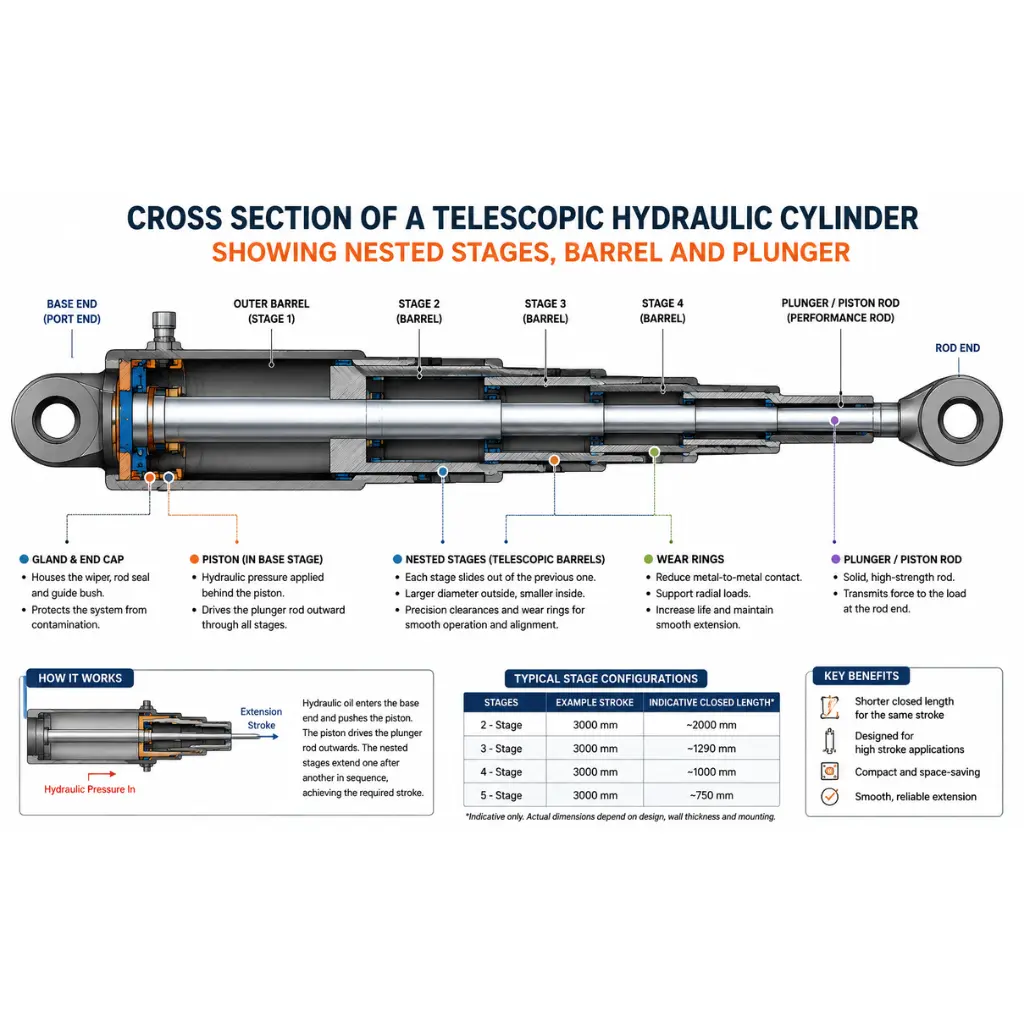
A telescopic hydraulic cylinder delivers a long stroke from a short retracted length. It does this with nested stages — a series of tubes, each smaller than the last — that extend one after another instead of all at once.
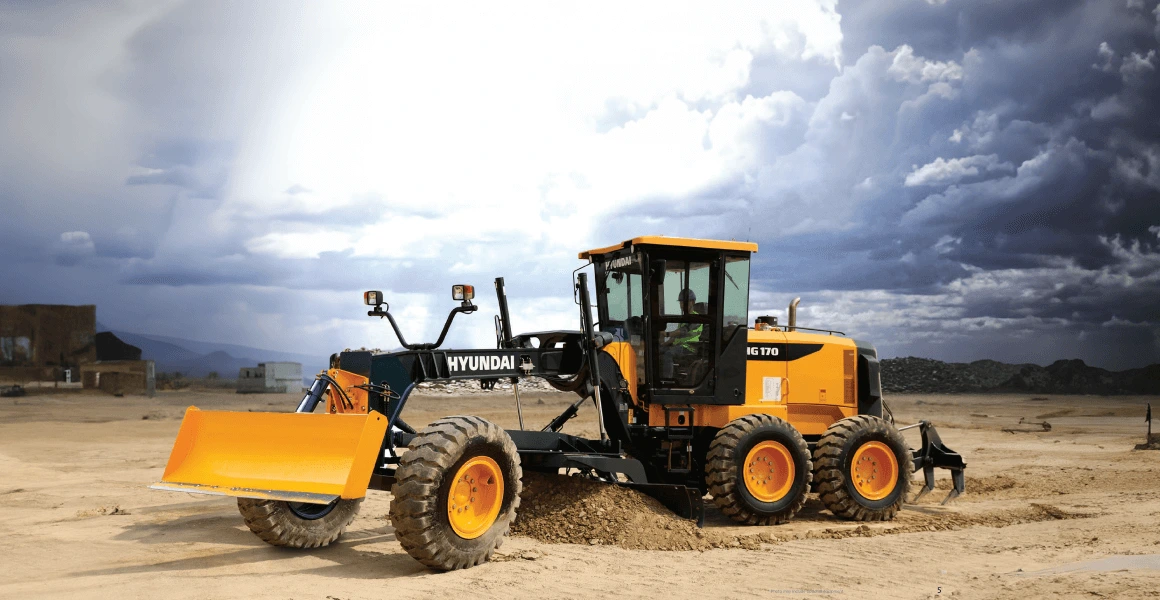
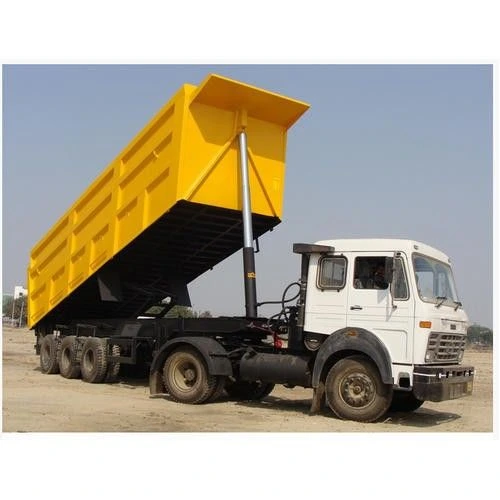
The reason to use one is space. A conventional single-stage cylinder retracts to roughly 110% of its own stroke, so a 3 metre lift needs well over 3 metres of mounting length. A five-stage telescopic cylinder can give you the same 3 metre stroke from a closed length of around 750 mm. That is the whole point of the design, and it is why every tipper body and dump truck on the road uses one.
Fiable Hydraulics manufactures telescopic cylinders to order at our ISO 9001:2015 certified plant in Chakan, Pune. Stage count, closed length, stroke, tonnage, mounting and porting are built to your machine — not selected from a catalogue. Every cylinder is pressure, function and leak tested before dispatch. Fifteen years supplying OEMs, machine builders and exporters across India and 20+ countries.
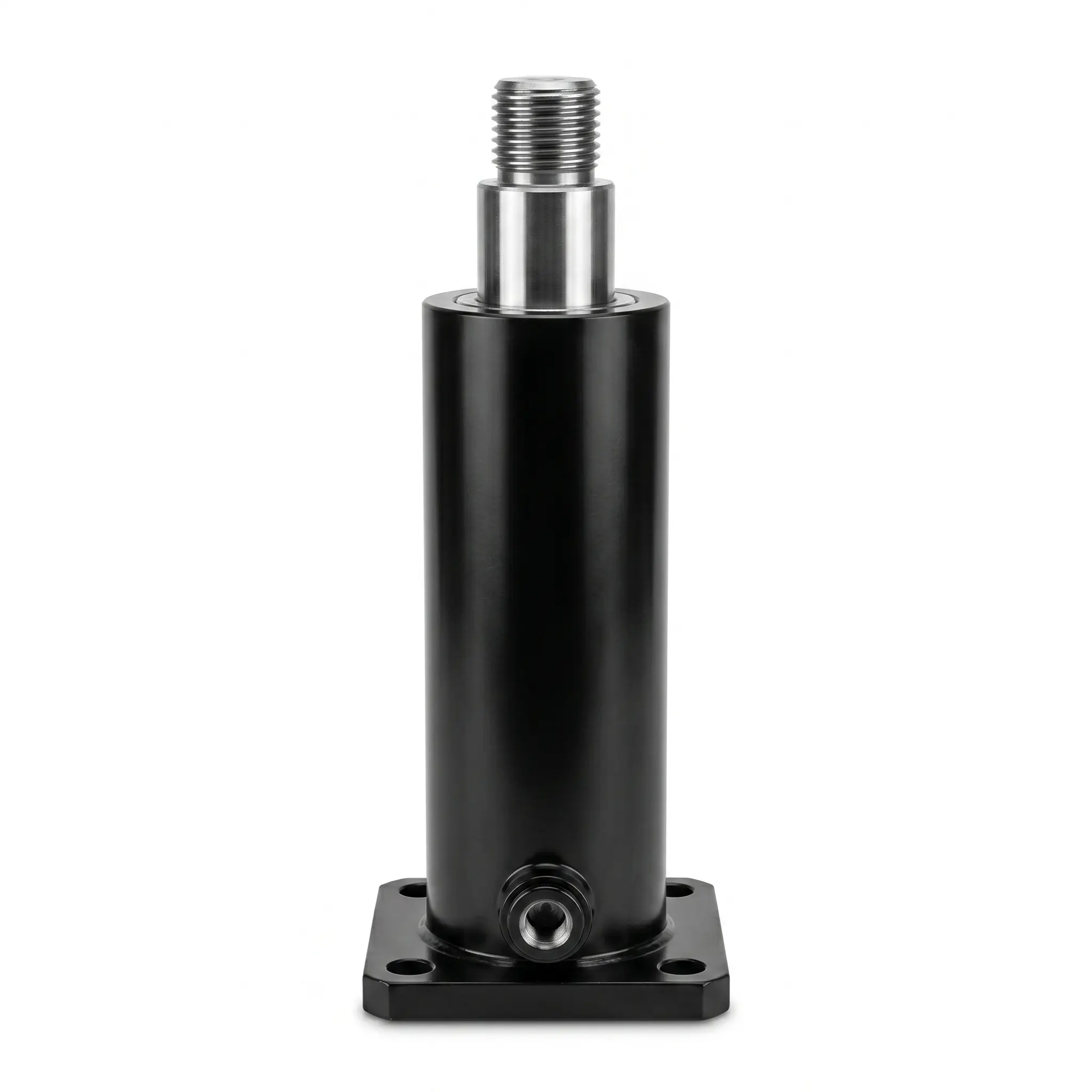
Click and drag to interact in 360° and explore structural dimensions.
Parameter Range | |
|---|---|
Number of stages
|
2 to 5
|
Stroke
|
NA
|
Closed length
|
NA
|
Lifting capacity
| |
Working pressure
|
NA
|
Action
|
Single acting · Double acting · Partially double acting
|
Mounting
|
Trunnion, cross-tube, clevis, flange — to drawing
|
Configuration
|
Front-end (under-cab) · Underbody · Custom
|
Testing
|
Pressure, function and leak tested; test capability to 10,000 PSI
|
Component |
Material |
Tolerance |
|---|---|---|
Stage tubes
|
Honed tube
|
ST 52.3
|
Plunger / rod stage
|
EN-series steel, hard chrome plated
|
f7
|
Gland and bearing rings
|
NA
|
—
|
Seals
|
Parker, Hallite, Royal
|
—
|
Theoretical force at 450 bar. Push uses the full bore area; pull uses the annular area. Actual output is slightly lower after seal friction.
Bore (mm) |
Rod (mm) |
Push (kN) |
Push (t) |
Pull (kN) |
Pull (t) |
Push : Pull |
|---|---|---|---|---|---|---|
40
|
25
|
57
|
5.8
|
34
|
3.5
|
1.64
|
63
|
36
|
140
|
14.3
|
94
|
9.6
|
1.48
|
80
|
45
|
226
|
23.1
|
155
|
15.8
|
1.46
|
100
|
56
|
353
|
36.0
|
243
|
24.7
|
1.46
|
125
|
70
|
552
|
56.3
|
379
|
38.7
|
1.45
|
160
|
90
|
905
|
92.3
|
619
|
63.1
|
1.46
|
200
|
110
|
1,414
|
144.2
|
986
|
100.5
|
1.43
|
250
|
140
|
2,209
|
225.2
|
1516
|
154.6
|
1.46
|
At a standard rod-to-bore ratio of around 0.55, pull force runs roughly 30–35% below push force. If your return stroke has to work against a real load, tell us —a larger rod raises pull force and buckling resistance, at the cost of more oil to extend.
More stages mean a shorter closed length for the same stroke — and more cost, more seals, and less force at full extension. This is the trade-off the whole selection comes down to.
Indicative closed lengths for a 3000 mm stroke:
Configuration |
Closed length |
Extended length |
|---|---|---|
Single-stage rod cylinder
|
~3300 mm
|
~6300 mm
|
2-stage telescopic
|
~2000 mm
|
~5000 mm
|
3-stage telescopic
|
~1290 mm
|
~4290 mm
|
4-stage telescopic
|
~1000 mm
|
~4000 mm
|
5-stage telescopic
|
~750 mm
|
~3750 mm
|
Read it this way: measure the space you have between your mounting points when the machine is at rest. That is your closed length. Work back from it to the stage count. These figures are indicative — a general guide for first-pass selection. Actual closed length depends on stage wall thickness, gland design and mounting. Send us your available space and required stroke and we will confirm the exact figure on a general-arrangement drawing before anything is machined.
Feature |
Single Acting Telescopic |
Double Acting Telescopic |
|---|---|---|
Extension
|
Hydraulic
|
Hydraulic
|
Retraction
|
Gravity or load weight
|
Hydraulic
|
Ports
|
One
|
Two
|
Retraction control
|
None — falls under load
|
Full control
|
Cost
|
Lower
|
Higher
|
Best for
|
Tipper bodies, dump trucks, dump trailers
|
Lifts, platforms, horizontal or over-centre duty
|
Most telescopic cylinders are single acting. On a tipper the body’s own weight collapses the stages, so paying for a powered return buys nothing.
Choose double acting when there is no load to bring it back — a platform lift, a horizontal application, or anything that has to retract on demand regardless of load.
Partially double acting is also possible: the largest stage powered both ways, the remaining stages single acting. Used on over-centre applications where gravity works against you for part of the stroke.
Our double acting hydraulic cylinders are used across industries where controlled force is needed in both directions – pushing and pulling.
Got questions about ordering, delivery, or custom designs? Find your answers below.
A multi-stage cylinder made of nested tubes that extend one after another, giving a long stroke from a short retracted length. Also called a multi-stage or telescoping cylinder. It is the standard choice for tipper bodies, dump trucks and lifts where the required stroke is longer than the space available.
It depends on your closed length. More stages give a shorter retracted length for the same stroke, at higher cost and lower force at full extension. As a guide, a 3000 mm stroke needs about 2000 mm closed in 2 stages, or around 750 mm closed in 5 stages. Send us your available space and we will confirm.
Each stage is smaller in diameter than the one before, and force is area times pressure. So the last stage produces the least force — often under 30% of the first. Size the cylinder on the load at the end of the stroke, not the beginning.
Both are available. Most are single acting — on a tipper the weight of the body collapses the stages, so a powered return is not needed. Double acting is used where there is no load to bring it back, such as platform lifts or horizontal applications. Partially double acting is available for over-centre duty.
Yes. Stage count, closed length, stroke, tonnage, mounting and port position are all built to your drawing or machine data. You get a general-arrangement drawing to approve before machining starts.
Yes. We supply to more than 20 countries from our Chakan, Pune facility and handle export documentation and packing.
Fiable Hydraulics Pvt. Ltd. is an ISO 9001:2015 certified manufacturer of hydraulic cylinders, power packs and complete hydraulic systems — designed, machined and pressure-tested at our facility in MIDC Chakan, Pune.
© 2026 Fiable Hydraulics Pvt. Ltd. All Rights Reserved.
ISO 9001:2015 Certified · Manufactured in Pune, India