Applications · Car Carriers
Customized hydraulic cylinder solutions for car transportation and loading systems. Fiable Hydraulics designs and manufactures hydraulic cylinders for car carrier and car transporter trailers: upper deck lifting, rear section tilt, platform raising and lowering, and loading ramp operation. Every cylinder is built to the trailer builder’s requirement at our facility in Chakan MIDC, Pune.
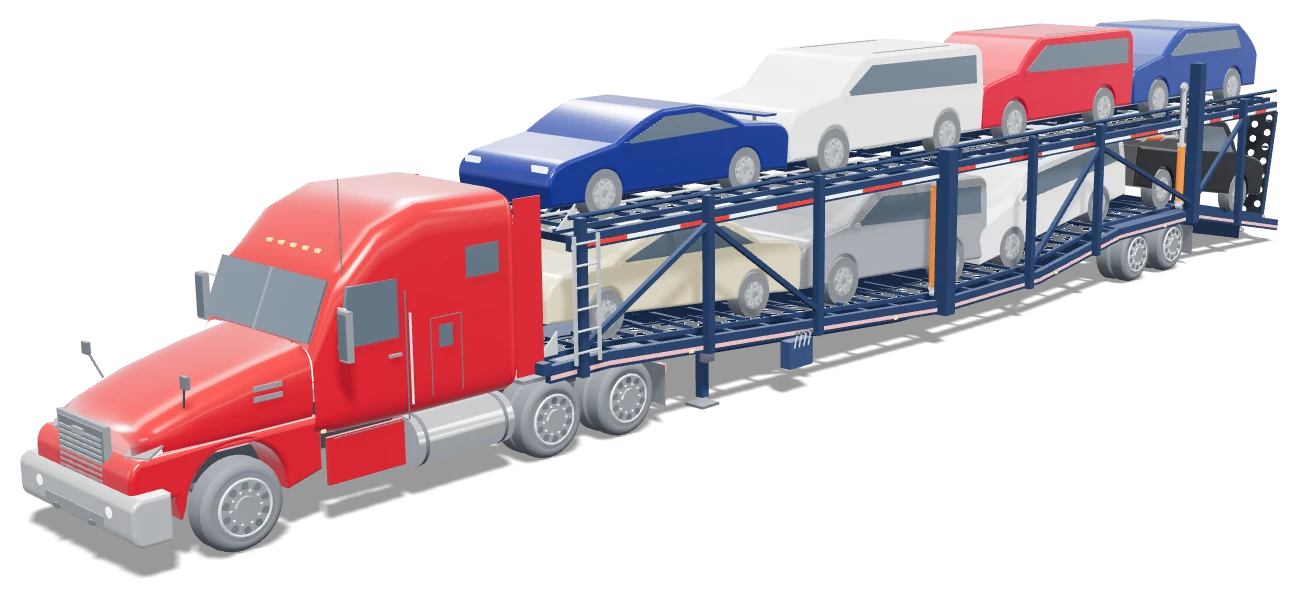
Conceptual 3D illustration of a two-axle, two-deck car carrier trailer
Application overview
A car carrier (car transporter) moves several vehicles on two decks. To load them, parts of the deck structure have to move: the loading ramps come down to the ground, the upper deck tilts into a drive-on incline, a hinged rear section bridges the gap to the ramp, and the loaded upper deck is lifted to make room for the cars below. Hydraulic cylinders for car carriers provide this movement. They turn oil pressure from the trailer’s hydraulic power pack into controlled, straight-line force.
The number, size and position of the cylinders depend on how the trailer builder has designed the decks. A two-deck semi-trailer, a rigid truck body and a single-deck carrier all use different arrangements. The 3D model below shows one typical two-axle, two-deck layout with four pairs of cylinders.
On this design the decks are held for transit by mechanical locking pins, so no hydraulic locking cylinder is shown.
Interactive 3D model
Click the model to rotate and zoom. Choose a numbered cylinder group to highlight it, or play the load and unload sequence to watch each cylinder pair work in turn.
Conceptual illustration of a typical 19.9 m two-axle, two-deck car carrier. Cylinder positions and movements are shown for explanation only and are not an engineering-approved design. Cylinder positions, sizes and mountings for your trailer come from your own drawing and load calculations.
Working principle
Every moving deck, ramp and section on a car carrier follows the same basic hydraulic cycle.
Simplified working principle · conceptual, not to scale
01
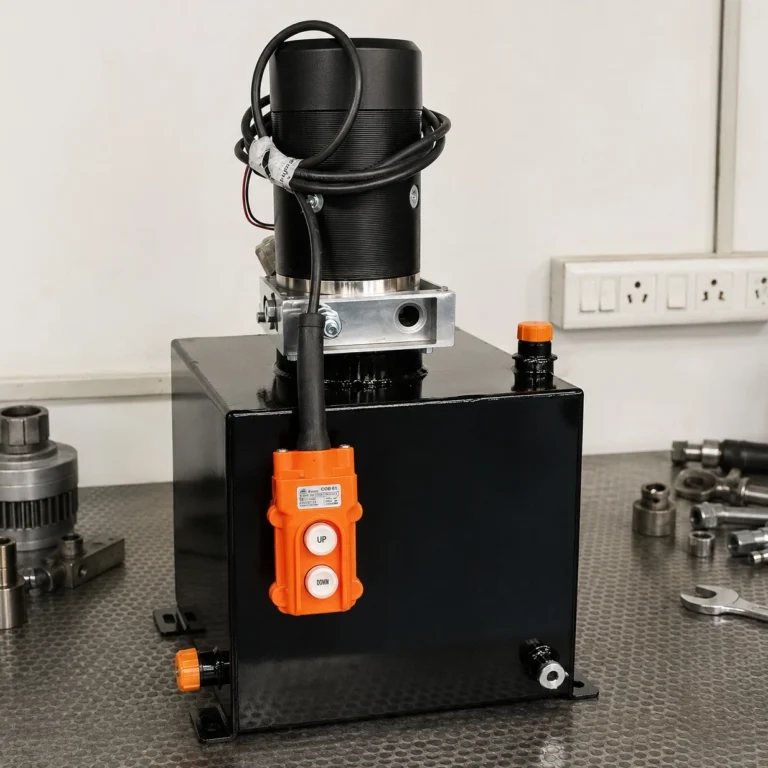
The pump in the hydraulic power pack draws oil from the tank and delivers it under pressure to the control valve.
02
When the operator moves the valve lever, oil is routed into the cylinder chamber behind the piston (the cap end).
03
Oil pressure acting on the piston area produces the pushing force. The piston and the hard-chrome-plated rod move out of the cylinder.
04
The rod end is pinned to the deck, ramp or hinged section, so the extending rod lifts, tilts or positions it. With a chain or lever arrangement the platform can travel further than the rod.
05
Reversing the valve sends oil to the rod side of a double acting cylinder, or lets it return to the tank under the load on a single acting one. The cylinder retracts and the platform lowers. Load-holding valves are typically used so a deck cannot drop if a hose fails; the circuit is set by the trailer designer.
Where our cylinders are used
These are the functions shown in the 3D model. Your trailer may use some or all of them, in a different arrangement.
Cylinder group 1
Cylinders in the deck columns lift the loaded upper deck so the lower deck can be loaded underneath, then lower it back onto its stops. They work in pairs, one on each side of the deck.
Cylinder group 2
A hinged rear section of the upper deck tilts down to meet the ramp, giving a continuous drive-on path to the upper deck. Tilt cylinders between the main platform and the rear section set the angle and bring it back level for transit.
Cylinder group 3
Ramp cylinders at the rear hinge lower the loading ramps to the ground and fold them up again for transit, so the ramps do not have to be lifted by hand.
Cylinder group 4
On this design, cylinders in the rear columns raise and lower the rear end of the main upper platform through a 2:1 chain, so the platform travels twice the rod stroke. Lowering the rear end creates the incline that cars drive up.
On the design shown, the decks are held for transit by mechanical locking pins.
Our hydraulic cylinder solutions
We build cylinders to the trailer builder’s drawing, or help develop one from the deck layout and loads. Which cylinder type suits each position depends on your machine configuration and load requirements. Not every cylinder type is suitable for every function, so the final design is agreed with you before production.
Pushed out by oil pressure and retracted by the load or a spring. Can suit functions where the platform's own weight lowers it, subject to your design.
Powered in both directions, for functions that must be driven both ways, such as folding ramps up and lowering them under control.
Multi-stage cylinders give a long stroke from a short closed length where installation space is tight. Used only where your layout needs it.
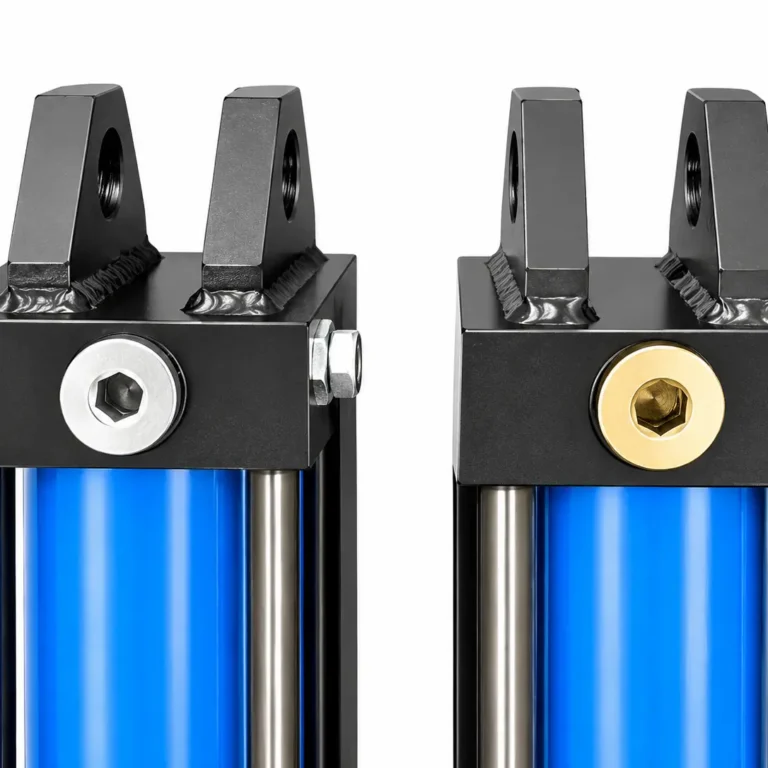
Clevis, rod eye, trunnion, flange or foot mountings, with pin sizes and port positions to suit your brackets.
Bore, rod diameter, stroke and working pressure are calculated from your loads, geometry and power pack, not picked from a fixed list.
Seals, port positions and the matching hydraulic power pack or control valves engineered around how your car carrier works.
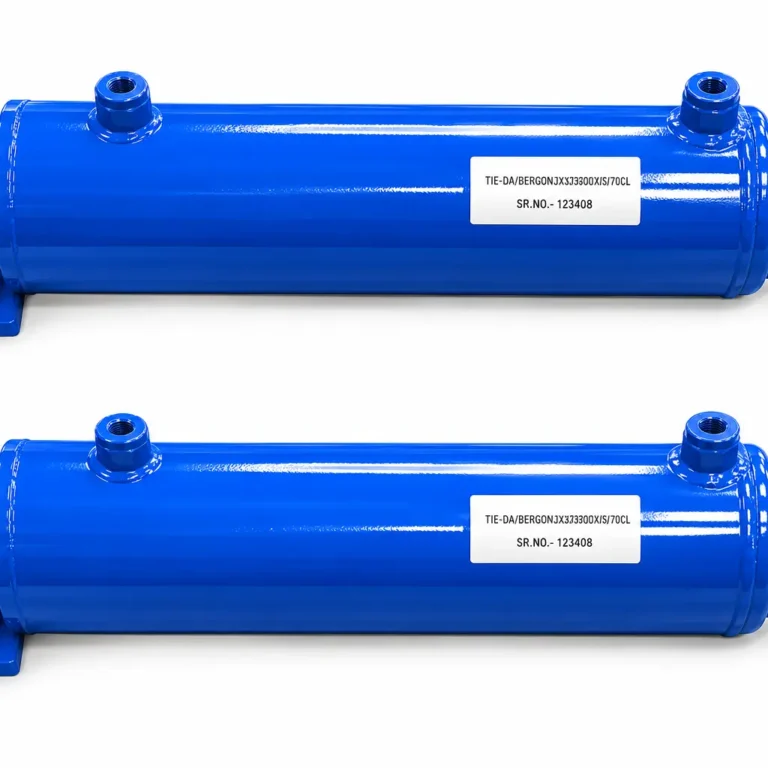
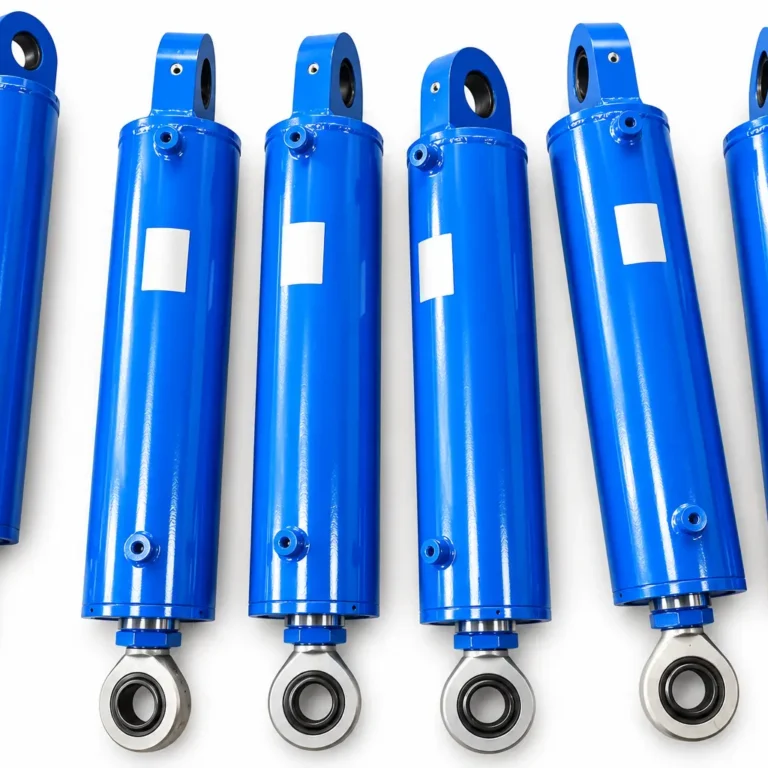
Photos from our gallery. Car carrier cylinders are built to your own drawing.
Technical specifications
We do not publish standard bore, stroke, pressure or load figures for car carrier cylinders. They are worked out for each trailer from your drawing and loads.
Why choose Fiable Hydraulics
Our in-house design team reviews your drawing or loads and prepares the cylinder drawing for your approval before production.
CNC and VMC machining and vertical honing in our own plants at Chakan MIDC, Pune.
Piston rods are hard chrome plated in our in-house plant for wear and corrosion resistance.
Dimensional inspection, clean-room assembly and pressure testing on our own test facility before dispatch.
Cylinders, hydraulic power packs and control valves from one supplier, matched to your car carrier.
ISO 9001:2015 certified quality management system, with CE certification held by Fiable Hydraulics.
FAQ
They move the parts of the trailer that carry and load the vehicles: lifting the upper deck, tilting hinged deck sections, raising and lowering platforms, and operating the loading ramps.
Usually in the deck columns, between hinged deck sections and at the rear ramp hinges. The exact positions depend on the trailer design. The 3D model on this page shows one typical two-deck layout.
There is no single answer. Single acting, double acting and telescopic cylinders each suit different functions. We recommend a type for each position after reviewing your drawing, loads and hydraulic circuit.
Only after we see your drawing or layout and the loads. We calculate the bore, rod diameter, stroke and working pressure for each position rather than quoting standard figures.
Yes. Send your drawing, or the details of an existing cylinder, and we will quote and manufacture to it, or suggest changes where they are needed.
Yes. We manufacture hydraulic power packs and can supply the cylinders, power pack and control valves as a matched set for your car carrier.
Your drawing or reference photos, the function of each cylinder, the load, required stroke, mounting details, operating pressure if known, and the quantity.
Enquiry / RFQ
Tell us about your trailer and the cylinders you need. Use the form for your details and requirements, and send technical drawings or reference images by WhatsApp or email.
Drawings: WhatsApp +91 73978 62638 or info@fiablehydraulics.com
Fiable Hydraulics Pvt. Ltd. is an ISO 9001:2015 certified manufacturer of hydraulic cylinders, power packs and complete hydraulic systems — designed, machined and pressure-tested at our facility in MIDC Chakan, Pune.
© 2026 Fiable Hydraulics Pvt. Ltd. All Rights Reserved. |Privacy Policy|Terms & Conditions
ISO 9001:2015 Certified · Manufactured in Pune, India
WhatsApp us
Share your requirement — our team replies within 24 hours.